Annual Meeting

Registration for the 2026 Annual Meeting is Now Open—Shape the Future of the Defense Bar in America's Capital

The wait is over! Registration for the 2026 DRI Annual Meeting is officially open, and early birds can save up to $700 by securing their spot before September 9.

This year’s event, held in Washington, D.C. from October 21-23, promises to be the most dynamic yet, featuring Senator Joe Manchin and other top-tier speakers. Whether you're looking to expand your professional network, gain cutting-edge insights, or simply connect with fellow DRI members, this is the place to be.

And remember—this isn’t just for leadership. The Annual Meeting is a game-changer for all DRI members. It’s the perfect opportunity to engage with peers, share ideas, and shape the future of the defense bar.

Don’t miss out—register now and lock in your savings!


DRI Membership

Share Free DRI Membership with Your Summer Associates!

Give the Gift of DRI Membership with 2026 Summer Associates and Judicial Interns

From now through August 31, 2026, DRI members will have the opportunity to give their summer associates and judicial interns a gift to help build their networks and enhance their careers: a FREE Law Student Membership! As an added benefit of membership, you can show your Summer Associates or Judicial Interns appreciation with the gift of DRI membership.

To qualify for the 2026 Summer Associates and Judicial Interns Free Membership Program, Summer Associates and Judicial Interns must submit an online application, be a 2026 Summer Associate or Judicial Intern of a current DRI member, not a current member, and be currently registered as a full-time or evening student pursuing a J.D. degree.

Share this link with your associates or interns!


Member Webinar

Are You Making the Most of Your DRI Benefits?

We’re excited to have you as part of our community and want to ensure you're getting the most out of your membership.

Please join us for a Making the Most of Your Benefits interactive webinar on June 15th, where you'll:

  • Hear from members of DRI's Executive Committee on ways to get engaged in DRI.
  • Learn about the full range of DRI member benefits, including countless professional development and networking opportunities.
  • Find out how to get involved with committees.

From educational programs and networking opportunities to exclusive member resources, there are countless ways to engage, connect, and get value from your DRI membership.

Join the Zoom Meeting here on June 15 at 2:00 p.m. CT

Access the meeting in other ways:

Questions or issues connecting? Please contact our team at membership@dri.org.


DRI Education

Introducing DRI’s 2027 DRI Seminar Calendar

It's time to start planning your professional development for 2027.

DRI is excited to announce the release of the 2027 Seminar Calendar, featuring industry-leading educational programs, networking opportunities, and practical insights designed specifically for lawyers defending business.

From cutting-edge litigation trends and emerging legal issues to trial skills and substantive practice area programming, DRI's seminars provide attendees with the knowledge, connections, and strategies needed to stay ahead in an evolving legal landscape.

Whether you're looking to expand your expertise, connect with peers from across the country, or identify speaking and leadership opportunities, the 2027 seminar lineup offers something for every stage of your career.

View the complete 2027 Seminar Calendar below and mark your calendar for the programs most relevant to your practice. We look forward to seeing you throughout the year as we continue to deliver exceptional education and meaningful opportunities to build relationships and grow your business.

Don’t see the calendar? Click here.


Member Spotlight

Stepping Forward Early: Why Young Associates Should Seek Challenge and Autonomy

By Ryan Mill

For many young associates, the first years of practice are defined by a careful balance: learning the fundamentals while trying not to overstep. It is natural — if not inevitable — to feel hesitant about taking on tasks that seem just beyond one’s current level of comfort. Yet, it is precisely in these moments of discomfort that meaningful professional development occurs.

Early in one’s career, opportunities to stretch are often disguised as daunting assignments: leading a client call, drafting a dispositive motion, taking the lead on a deposition, or volunteering to argue a motion. The instinct may be to defer, to wait until one feels “ready.” However, readiness in the legal profession is less a prerequisite and more a byproduct of experience. Associates who proactively seek out challenging work develop critical skills faster, build confidence sooner, and establish themselves as trusted advocates of their firm’s clients — ultimately leading to the development of their own client base.

One of the most immediate benefits of pursuing greater responsibility is skill acceleration. Complex assignments demand not only legal knowledge but also judgment, organization, and adaptability. While observing senior attorneys provides valuable insight, true growth occurs when associates are forced to synthesize that knowledge and execute independently. Each challenging project becomes a condensed learning experience that cannot be replicated through passive participation.

Equally important is the development of professional confidence. Confidence in legal practice is not derived from titles or tenure; it comes from repeated exposure to responsibility and the realization that one can meet it effectively. Taking ownership of substantive tasks, even when imperfectly executed at first, reinforces an associate’s ability to navigate uncertainty. Over time, this confidence translates into more effective advocacy and stronger client relationships.

Seeking autonomy also signals initiative — a quality that senior attorneys and clients alike recognize and reward. Associates who volunteer for responsibility demonstrate investment in their work and commitment to their own development. This often leads to increased trust, more meaningful assignments, and a greater role in case strategy. Rather than remaining on the periphery, these associates become integral members of the team earlier in their careers.

Of course, pursuing challenge does not mean operating without guidance. Effective associates understand when to ask questions, seek feedback, and collaborate with more experienced colleagues. The goal is not to eliminate supervision, but to gradually shift from reliance to independence. This progression requires both initiative from the associate and support from mentors who are willing to delegate and provide constructive feedback.

Importantly, embracing early challenges also reframes how failure is perceived. Mistakes are inevitable, particularly when stepping into unfamiliar territory. However, when approached with a growth mindset, these experiences become some of the most valuable learning opportunities. Associates who push beyond their comfort zones learn not only how to succeed, but also how to recover, adapt, and improve.

In a profession that demands both intellectual rigor and practical judgment, there is no substitute for hands-on experience. Young associates who actively seek out challenging assignments and advocate for increased autonomy position themselves to grow more quickly and meaningfully. While the initial discomfort may be unavoidable, it is also temporary, and the long-term benefits are substantial. The early years of practice offer a unique window for accelerated development. Associates who lean into that opportunity, rather than away from it, often find themselves not just keeping pace, but setting it. Next time you find yourself in an uncomfortable position, lean into it, because it will bring you closer to where you want to be professionally.

Ryan Mill is an Associate at Stanton | Barton LLC in Saint Louis, Missouri, where he specializes in handling transportation and product liability matters. He handles such matters in a wide range of jurisdictions, including but not limited to, Missouri, Illinois, Iowa, Kansas, Ohio and California, where he has defended his clients’ interests in both state and federal courts. Ryan serves as Chair of the Young Lawyers The Voice Publication subcommittee and can be reached at rmill@stantonbarton.com.


DRI Elections

Send In Your Declarations for the 2026 DRI Elections

DRI 2026 Elections Declarations Due July 1, 2026

Ready to Shape the Future of the Defense Bar? DRI is seeking dynamic leaders to champion the interests of our members and all lawyers defending business. If you’re passionate about making an impact and elevating your career, now is your opportunity to step forward.

Four National Director seats on the DRI Board of Directors, plus the offices of Second Vice President and Secretary–Treasurer, will be filled at the DRI 2026 Annual Meeting in Washington, D.C. on October 21-23.

To be considered for one of these positions, a DRI member must first file a Declaration of Candidacy form. Declarations are due by July 1, 2026 at 5:00 p.m. CDT.

Visit the DRI Election Hub


DRI Foundation

Law Student Diversity Scholarship Applications Due June 30!

DRI Foundation Law Student Diversity Scholarship 2026-2027

DRI’s annual Law Student Diversity Scholarship program, open to rising (2026–2027) second- and third-year law students, is accepting applications until June 30.

One scholarship in the amount of $10,000 and two scholarships in the amount of $5,000 each will be awarded. The recipients will be announced at the DRI Annual Meeting in Washington, D.C. in October.

To qualify for this scholarship, a candidate must be a full-time student. Evening students also qualify for consideration if they have completed one-third or more of the total credit hours required for a degree by the applicant’s law school.

Apply for the Scholarship


DRI Awards

DRI Award Submissions Due July 1!

Do you have colleagues who deserve recognition for their professional contributions? It’s time to give them the recognition they deserve.

DRI's 2026 Annual Professional Achievement and Service Awards celebrate and honor outstanding performance by state, local, and national defense organizations, DRI law firms, and individual members, and we are looking for nominees.

To nominate someone for the award, download a copy of our awards brochure to learn about eligibility criteria and selection process for nominating a deserving individual, your organization, and its members. We encourage you to submit an entry for each award using the form below by July 1, 2026.

Submit Your Nominations Now


In Memoriam

DRI Mourns Passing of Former DRI President Robert C. Maynard

It is with profound sadness that DRI mourns the passing of Robert C. Maynard, DRI President in 1983, who was instrumental in the founding of state groups in Ohio and Kentucky. While Robert’s passing is deeply felt, his enduring legacy will continue to influence and inspire the DRI community for generations.


Member Spotlight

What I’ve Learned About Solo Practice

By Lawrence Ebner

In 2016, after 42 years at what had morphed into a global law firm with thousands of lawyers, I made a decision that many lawyers would consider risky: I went solo, and at the age of 69, launched my own Washington, D.C.-based appellate boutique in a city teeming with high-profile appellate lawyers. A decade later, I have no regrets—and a more educated view of what full-time solo practice really means, especially for us Baby Boomers who have no desire to retire.

“Solo” Practice is a Misnomer

Feeling isolated was my greatest fear. But instead, solo practice has enabled me to expand my professional network enormously. I have great admiration for highly skilled appellate specialists in large practice groups. For me, however, working within the bubble of a multi-practice international law firm was actually quite confining.

As a solo practitioner, I have burst that bubble. Solo practice has broadened my professional horizon and perspective. It has helped me cultivate professional relationships throughout the United States and afforded me opportunities to mentor younger attorneys with personal backgrounds different than mine.

I now interact continually with numerous attorneys at law firms of all sizes. I also have the freedom to devote as much time as I choose to leadership roles in DRI and other professional organizations. Unlike working in a large firm, I do not need anyone’s approval to attend professional meetings or seminars. Because registration fees and travel expenses come out of my own pocket, I value participation in such activities even more than when my former firm was picking up the tab.

Solo Practice is Fulfilling

Since hanging out my own shingle, l have received greater professional recognition than while at a large firm. This includes, for example, becoming a fellow of the American Academy of Appellate Lawyers, receiving DRI’s Tom Segalla Excellence in Education Award, and being selected as a Washington, D.C. appellate Super Lawyer 9 years in a row.

More importantly, six years ago I accepted an offer to wear a second professional hat as Executive Vice President & General Counsel of the Atlantic Legal Foundation, a venerable, nonprofit, free-enterprise advocacy organization. Without question this has been the capstone of my legal career. I conduct ALF’s amicus program, including writing most of its Supreme Court amicus briefs, with the benefit of a distinguished board and advisory council, including ALF Chairman & President Hayward D. Fisk, an extraordinary colleague with whom I interact almost daily. I could not have undertaken this tremendously satisfying professional and personal opportunity prior to becoming a solo practitioner.

Solo Practice is Fun

Running my own law firm means that I get to do it all, ranging from maintaining financial records to managing social media. I have become tech savvy. This includes keeping my law firm website and LinkedIn page up to date with my amicus briefs, articles, and presentations. As an adjunct to my work for ALF, I also have launched an online newsletter, All Things Amicus, which covers the waterfront on strategizing, writing, and filing amicus briefs.

Enjoying my private office near the White House in a shared office suite with other professionals has helped me maintain my 5-days per week work routine. I’m not knocking home offices; I have one too. But for me, part of the fun of solo practice is being a physical part of the D.C. legal community.

Solo Practice has no Age Limit

After more than four decades at my former law firm, I launched my solo practice at an age when many of my peers are retiring. Choosing to retire is fine. At my solo-practice firm, however, there is no mandatory retirement age or transition to senior status. In fact, given the steady stream of challenging amicus briefs that I write for ALF on a great variety of important legal issues, I think that my appellate advocacy skills are better honed now than ever.

Solo Practice Offers True Autonomy

There is no management committee or practice group leader looking over my shoulder. My conflict checks are quick and simple. I set my own flat fees for appellate litigation services and don’t have to worry about billable hours, utilization, realization, leverage, business origination, profits per partner, or an annual chat about my “metrics” with the compensation committee. Partner meetings are conducted inside my head. I don’t have to travel to partner retreats and endure high-priced consultants’ briefings about the latest trends in the global legal “industry.” And there is no water-cooler gossip at my solo-practice firm.

Solo practice has its own set of challenges and is not for everyone. But as a proud member of the legal profession, I can attest that going solo can be an attractive option for seasoned lawyers who seek more autonomy.

Lawrence Ebner is founder of Capital Appellate Advocacy PLLC and Executive Vice President & General Counsel of the Atlantic Legal Foundation. He is immediate past chair of the DRI Center for Law & Public Policy, and vice chair of the Appellate Advocacy Committee.

Committee News

Litigation Skills Committee Renamed Trial and Litigation Skills Committee

Litigation Skills

DRI is pleased to announce that the Litigation Skills Committee has been renamed the Trial and Litigation Skills Committee, effective June 2026.

This name change better reflects the full scope of the committee's work and its commitment to helping defense lawyers develop practical skills across all stages of litigation. Members can expect the same high-quality networking opportunities, educational programming, and professional development resources that have made the committee a valuable part of the DRI community.

We thank the committee's leadership and members for their continued dedication to advancing litigation excellence and look forward to the continued impact of the Trial and Litigation Skills Committee.

Join the Trial and Litigation Skills Committee


Member Spotlight

Start Small to Scale Smart: How to Run an AI Pilot Before You Roll It Out Across the Organization

By Frank Ramos

AI is now everywhere. Law firms, legal departments, claims teams, and businesses of every kind feel pressure to adopt it. The pressure makes sense. No one wants to fall behind. No one wants to miss a tool that can save time, improve work product, and create an edge. But speed can create its own risk if an organization rushes into a platform before it knows what the tool can actually do, where it fails, and how people should use it.

That is why a pilot program matters. A smart AI rollout should not begin with a firmwide launch, a companywide edict, or a broad invitation for everyone to start experimenting on live work. It should begin with a small test group, a clear use case, measured results, and disciplined feedback. Start small. Learn fast. Fix what breaks. Then expand with confidence.

That approach works because AI is not like ordinary software. It does not only process commands. It responds to prompts, depends on context, and can produce different results based on how users ask questions, what they upload, and how well they understand the system. A pilot lets an organization see the platform in real life, not in a sales demo. That distinction matters.

The Pilot Should Have a Purpose

The first mistake many organizations make is running a pilot with no clear goal. They let a small group use the tool and then ask whether people liked it. That is too vague. A real pilot needs a defined purpose. You need to know what problem you are trying to solve.

Maybe the goal is faster first drafts. Maybe it is better summaries of long records. Maybe it is stronger issue spotting, cleaner claims notes, faster contract review, or more consistent internal communications. Pick a few use cases that matter. Pick work that repeats often enough to measure. Pick work where improvement would have real value. If the pilot tries to test everything at once, it will teach you very little.

A good pilot asks a simple question. Does this tool improve speed, quality, consistency, or insight in a way that matters to our work. Everything else should flow from that question.

Choose the Right Test Group

The second mistake is picking the wrong people. Do not build the pilot around only the most enthusiastic users or only the most skeptical ones. You need a balanced group. Include people who are curious, people who are cautious, and people who do the kind of work the platform is meant to help.

The group should be small enough to manage and large enough to test different work styles. In many organizations, five to ten users is a good start. You want a mix of senior and junior people. Senior professionals know what good looks like. Junior professionals often adapt to new tools faster and can show where training gaps exist. Together, they give you a better read on whether the platform works in practice.

This is especially true in legal and claims settings. Senior lawyers and claims leaders know when output sounds polished but lacks judgment. They know when something misses nuance, distorts risk, or sounds better than it is. That perspective matters because AI often produces material that feels impressive on first look but weakens under scrutiny.

Set Rules Before You Start

A pilot should not begin with open ended experimentation. Set rules first. Decide what users can upload, what data they cannot use, what matters stay off the platform, and what review steps apply before anything generated by AI leaves the building. Those rules protect the organization and improve the test.

That means deciding early whether the platform may be used with live files, sample files, or sanitized material. It means deciding whether users may rely on the platform for summaries only, first drafts only, or more advanced uses. It means deciding who reviews the work and how errors get flagged. Without clear guardrails, the pilot turns into a loose experiment with uneven results and avoidable risk.

The pilot also needs a baseline understanding of confidentiality, accuracy, privilege, data handling, and human review. No one should use the platform without knowing those ground rules. Training should come before use, not after a problem appears.

Train Users to Think Before They Prompt

The best pilot programs do not just teach the buttons. They teach the method. Most AI failures come from weak prompting, poor judgment, or blind trust in the output. So before users begin, teach them how to think through the task before they ask the platform to help.

That means asking basic questions first: What is the goal? Who is the audience? What facts matter? What tone fits? What should the output include? What should it avoid? The user who thinks through those issues will get better results and will also be more likely to catch errors.

Training should also teach users how to test the output. Compare it to source material. Check whether it missed an issue. Ask for alternative approaches. Push back on weak answers. Rewrite the text in your own voice. The point is not to let the machine do the thinking. The point is to help the user think better and faster.

Measure the Right Things

A pilot that relies on impressions alone will not tell you enough. You need actual measures. That does not mean building some massive data project. It means tracking a few metrics that show whether the platform creates real value.

Measure time saved on specific tasks. Measure whether the first draft improved or got worse. Measure how much editing the output needed. Measure whether users spotted recurring errors. Measure whether the tool made users better at seeing issues, trying new approaches, or organizing complex information. Also measure adoption. A platform that works in theory but that no one wants to use may not be the right fit.

Do not focus only on speed. Fast bad work is still bad work. The better question is whether the platform helps people produce stronger work in less time while keeping judgment intact. That is the standard that matters.

Create a Feedback Loop That Actually Works

Pilot programs fail when the feedback is casual, vague, or too late. Build a real feedback loop. Ask users to keep short notes on where the platform helped, where it failed, what surprised them, and what kind of prompts worked best. Meet with the group at set intervals. Review examples. Compare experiences. Look for patterns.

Those conversations often teach more than the raw numbers. One user may discover a prompt structure that improves output for everyone. Another may spot a recurring weakness in summaries, citations, or analysis. A senior user may explain why something that sounds good on paper would fall apart with a client, judge, or business leader. That is the kind of insight you want before a wider rollout.

The pilot should also include examples of failure. Those examples are useful. They show where the tool breaks. They show where training must improve. They show where the platform may not belong. A pilot should not be a sales exercise. It should be an honest test.

Refine the Use Cases Before You Expand

Once the pilot runs long enough to generate real examples, step back and refine the use cases. You may find that the platform is excellent at first drafts but weak at nuanced analysis. You may find that it helps with summaries but not with strategic recommendations. You may find that one department gets major value while another sees very little.

That is exactly what a pilot should reveal. Not every tool fits every task. Not every user should use the platform in the same way. The goal is not to prove the platform is magical. The goal is to identify where it helps, where it needs limits, and where it should not be used at all.

This is also the stage where organizations should refine training materials, create approved prompts, build review checklists, and develop practical guidance based on what the pilot actually showed. The pilot should leave behind a playbook, not just opinions.

Expand in Phases, Not in One Leap

After the pilot, do not jump straight to a full launch. Expand in phases. Start with the groups and tasks most likely to benefit. Give them the refined guidance, the sample prompts, the lessons from the pilot, and the guardrails that proved necessary. Let those groups build experience before the tool spreads more broadly.

That approach reduces risk and improves adoption. It also helps create internal champions who can teach others. People trust the platform more when it is explained by colleagues who tested it, learned its strengths, and know its limits. A phased rollout builds credibility because it grows from actual use, not abstract enthusiasm.

Expansion should also come with ongoing review. AI changes. Platforms update. Users get more ambitious. Risks shift. The work does not end after the pilot. The pilot simply gives you a smarter way to begin.

Leadership Must Stay Involved

A strong pilot needs leadership, but not in the form of slogans. Leaders should stay involved enough to define the purpose, support the training, insist on honest evaluation, and resist the urge to declare success too early. The worst rollout happens when leaders want proof that their AI investment was right and the pilot becomes a performance.

Good leaders ask harder questions: Where does this platform actually help? Where does it create risk? What should we ban? What should we teach? What should we measure? What should we fix before this expands? That mindset turns a pilot into a real decision making tool.

Senior professionals should also stay close to the process because they can provide context that newer users may miss. They know when output lacks sound judgment. They know the difference between something useful and something merely fluent. They can help make sure the organization adopts the technology without lowering standards.

The Goal Is Not Fast Adoption. The Goal Is Smart Adoption

Organizations feel pressure to move quickly with AI. That pressure is real. But there is a difference between moving quickly and moving wisely. A pilot program gives you the chance to test the platform in a controlled way, teach people how to use it properly, measure the right outcomes, and build a rollout based on evidence instead of hope.

That is how smart organizations will do this. They will not ignore AI. They will not worship it either. They will test it, train around it, challenge it, and build from what works. They will use a small group to learn the tool, sharpen the process, and create a framework that others can trust.

That is the value of the pilot. It gives you room to learn before you scale and room to think before you commit. In a moment when so many organizations want to move fast, that discipline may be the smartest move of all.

Frank Ramos headshotFrank Ramos is a partner at Goldberg Segalla and practices in Miami in the areas of commercial, products, and catastrophic personal injury.


SLDO News

Leadership Updates

Several State, Local, and National Defense Organizations hosted their Annual Meetings in recent weeks. DRI members assumed new officer roles at the conclusion of the following business meetings.

  • Connecticut Defense Lawyers Association
    John Cannavino Jr. DRI member since 10/1/2019—President
  • Association of Southern California Defense Counsel
    Alice Chen Smith DRI member since 9/17/2025—President
  • Las Vegas Defense
    Renee Green DRI member since 9/29/2025—President-elect

Member Spotlight

Don’t Let Insurance Ruin Your Special Event

By Collin Hite

Planning a special event—whether it’s a wedding, corporate gathering, festival, or concert—requires careful consideration of risk management. Special event insurance is designed to protect organizers from unexpected financial losses. However, there are several coverage issues that policyholders, vendors, and venue owners should be aware of to avoid unpleasant surprises.

Misunderstanding Policy Exclusions

One of the most common pitfalls is assuming that all potential risks are covered. Many special event insurance policies have exclusions for:

  • Extreme weather (hurricanes, floods, or wildfires);
  • Pandemics or health crises;
  • Pre-existing structural issues at the event venue; and
  • High-risk activities such as fireworks displays or mechanical rides.

Organizers should review the fine print and speak with their insurer to clarify what is—and isn’t—covered.

Moreover, because many special event policies are purchased through websites, the buyer must pay extra attention to the language on the site. Often, insurers or brokers will require buyers to acknowledge the major exclusions in the policy as part of the process. Such acknowledgments are saved and can be evidence that the buyer (a/k/a policyholder) was aware of the exclusion even if just listed by title. Because, let’s be honest; a bride or groom (or other host) are not reading the policy after it is issued. They simply want a Certificate of Insurance (“COI”) required by the venue.

Insufficient Liability Limits

Special events often involve large crowds, alcohol service, and temporary structures, all of which increase liability exposure. Policies with low liability limits may not be adequate to cover medical claims or property damage if an accident occurs. Event planners should assess the scale of the event and ensure the liability coverage meets venue and legal requirements.

Unsophisticated buyers often do not recognize the scope of risk associated with their event. Many think “what could really happen?” Well, a guest gets drunk and has an accident that kills the driver and passengers leaving the wedding. A guest dives off a pier into shallow water and breaks her neck. Guests get into an argument and start shooting at a “reunion.” These are all real occurrences from what appeared to be mundane events when the policy was issued.

Gaps in Vendor and Third-Party Coverage

Many events rely on caterers, performers, equipment rentals, and other third-party vendors. If these vendors cause property damage or injury and are not properly insured, the event organizer might be held responsible. It’s important to:

  • Require vendors to provide proof of insurance; or
  • Ensure your policy extends coverage to third-party activities if needed.

Most special event policies only cover the buyer of the policy for his or her own negligence. This can be misleading as many also allow the buyer to add entities as additional insureds on the COI. Of course, a COI does not change the policy. The definition of additional insured rarely matches the vendors being added on COIs.

The same is true for venue owners. Many owners require the host to purchase special event insurance and believe that makes them additional insureds. In reality, that often is not the case. Owners are shocked when they have to make a claim with their own insurance, which we all know can affect subsequent premiums and renewals.

Cancellation and Postponement Limitations

Event cancellation insurance doesn’t always cover every reason for canceling. Common limitations include:

  • Voluntary cancellations (e.g., low ticket sales);
  • Known risks at the time of purchase; or
  • Failure to comply with permitting or legal requirements.

Providing thorough documentation of unforeseen events is often necessary to trigger coverage.

Timing of Purchase and Coverage Gaps

Buying coverage too late, after certain risks are foreseeable, can result in denied claims. For instance, purchasing event insurance after a storm warning has been issued may exclude weather-related cancellations.

Marketing Puffery Does Not Create Coverage

Many websites tout the extent of coverage for special event policies, or the variety of events that can be covered. Policyholders have tried to use that marketing to define the scope of coverage after a loss. For example, Arizona has a robust reasonable expectations doctrine with respect to insurance. Relying on the website marketing to define the scope of coverage is a dangerous methodology when compared to the “click through” acknowledgements during the actual purchasing process and policy language. It would be a rare instance where website puffery could create expectations of coverage, because the purchase process will debunk the view of hoped-for coverage.

Buyers Beware of Your Event Description

Insurers have clamped down on the types of special events they will insure. For example, outdoor weekend music festivals are now hard to insure due to rampant drug use at such events. Certain challenge activities that likely generate a lot of physical injuries may be hard to cover. Same for events centered around marijuana.

It is not unusual for buyers to first describe their event accurately when applying online. However, when the algorithm rejects the coverage, the prospect will try again and change the description in order to get the system to accept the application for insurance. This leads to a lot of rejections of coverage after a loss due to a misrepresentation in the application process. Understand that there is no human underwriting these policies. It is a computer system that quickly analyzes the online application answers and the algorithm accepts or rejects almost instantly. It is critical for buyers to be honest in the application process or run the risk of no coverage down the road.

A Real World Example: Murphy v. Evanston Insurance Company

In Murphy v. Evanston Insurance Company in Murphy v. Evanston Insurance Company, 544 F.Supp.3d 879 (D. Ariz. 2025), the Arizona federal court addressed critical issues surrounding the scope of special event insurance coverage. The plaintiffs, event organizers, sought coverage under their policy after an accident at a festival led to significant injury claims. Two attendees shot each other with one dying at the scene. Evanston denied the claim, citing specific policy exclusions for assault and battery and a misrepresentation in the event description during the online application process. On summary judgment, the court examined whether the insurer had a duty to defend or indemnify under the contract.

The court ultimately granted summary judgment to Evanston Insurance, finding that the plaintiffs’ event description in their application was materially inaccurate. Evidence showed that the organizers initially described the event truthfully, but changed the description after the automated system rejected coverage. The organizers described the event as a family reunion fish fry. In reality, it was a motorcycle event with rival biker gangs present. This misrepresentation went to the heart of underwriting risk and allowed the insurer to rescind or deny coverage. The court also emphasized that the policy contained clear exclusions for the type of activities involved in the accident, and marketing statements on the insurer’s website could not create reasonable expectations of coverage contrary to the policy language.

In its ruling, the court rejected the plaintiffs’ argument that Arizona’s reasonable expectations doctrine should override the express exclusions. While Arizona courts do occasionally apply this doctrine, the judge noted that the plaintiffs had clicked through multiple online acknowledgments of the exclusions and had received the policy documents before the loss. The court held that no reasonable jury could find that the plaintiffs were misled as to the scope of the coverage.

The Murphy decision reinforces two key lessons for event organizers and insurers alike: accuracy in applications is essential, and courts are reluctant to let marketing puffery override clear policy provisions. For policyholders, the case is a cautionary tale that attempting to adjust event descriptions to secure coverage can lead to a total denial of claims when a loss occurs.

Key Takeaways

  • Review policy exclusions and limitations carefully.
  • Confirm liability limits adequately reflect your event’s risk level.
  • risk level.
  • Vet vendor insurance to avoid unexpected liabilities.
  • Understand the conditions under which cancellations and postponements are covered.
  • Purchase insurance early to maximize protection.

By proactively addressing these potential coverage issues, event organizers can better secure their investment and provide peace of mind for all participants.

Collin J. Hite headshotCollin Hite is the president of Hite Insurance Consulting. He provides expert witness services across the United States for insurance coverage and bad faith cases. He also is Litigation & Insurance Counsel at Conservice, LLC.
Committee Spotlight Series

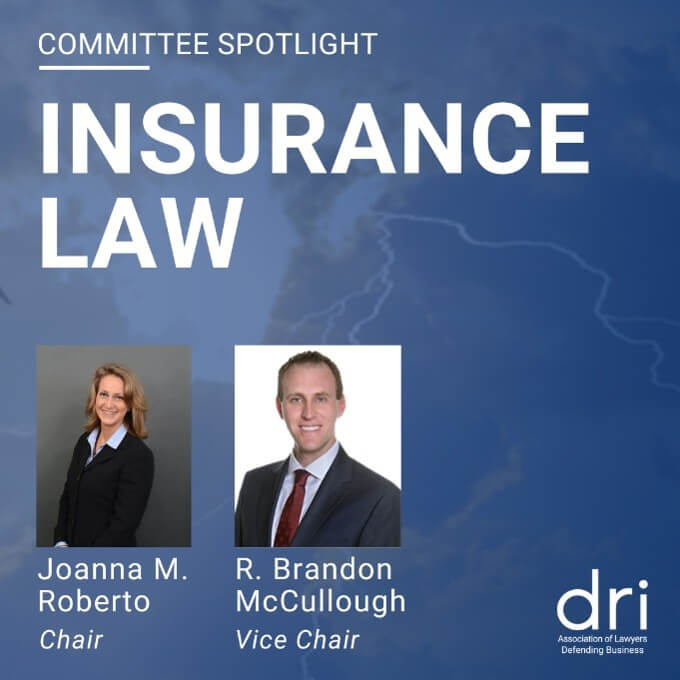
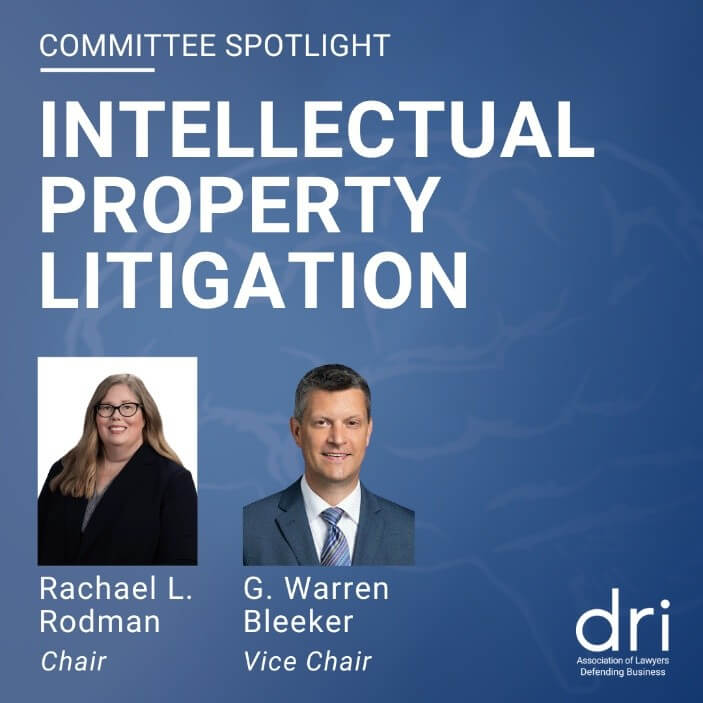
Employment and Labor Law, Governmental Liability, Insurance Law and Intellectual Property Litigation

DRI’s substantive law committees are an excellent way to grow your network, exchange ideas, and stay ahead of emerging issues. Joining any of DRI’s 30 substantive law committees is a great way to engage with the broader DRI community, enhance your career, and collaborate with attorneys across the country. This month, we're highlighting Employment and Labor Law, Governmental Liability, Insurance Law and Intellectual Property Litigation.

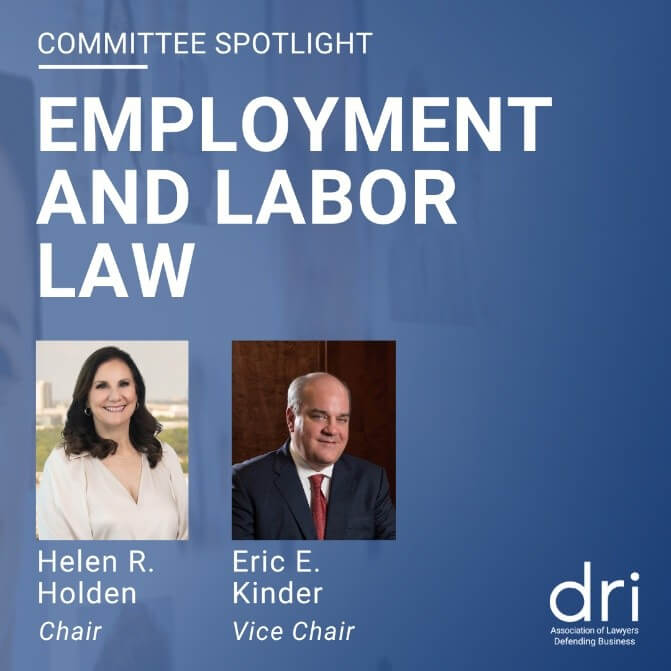
Employment and Labor Law

The Employment and Labor Law Committee is specifically designed for those who are involved in the practice of Employment and Labor Law. These members include outside counsel, in-house counsel and human resource professionals and claims professionals from employment practices liability insurance carriers. Like all DRI committees, this group offers opportunities to build relationships, contribute to publications, help plan programs, and stay informed about emerging topics in the field.

Join the Employment and Labor Law Committee Today

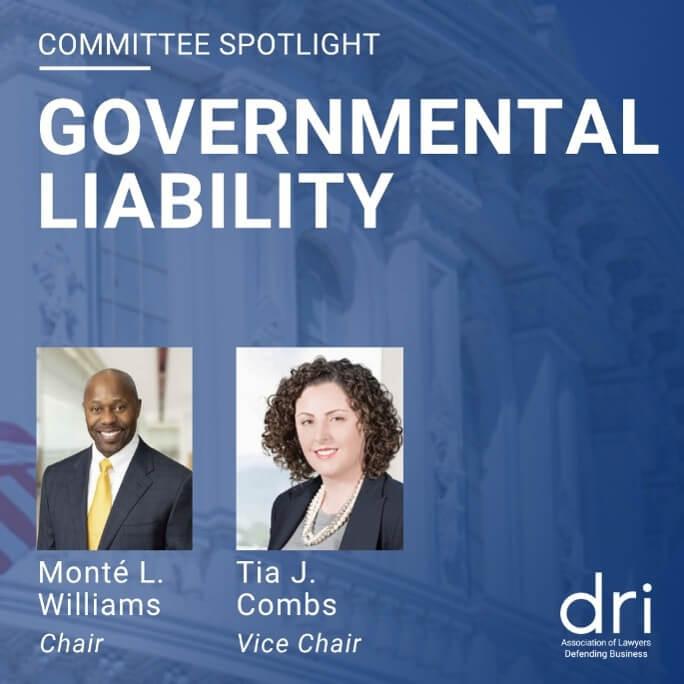
Governmental Liability

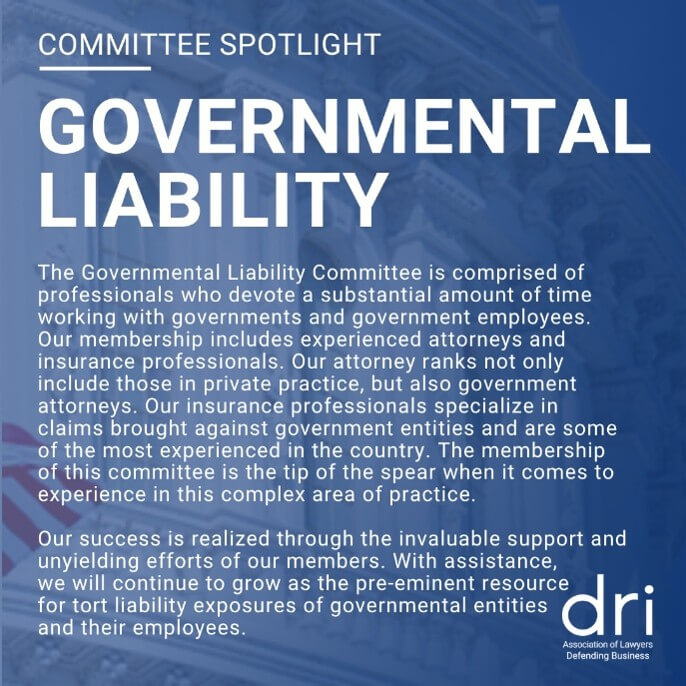
The Governmental Liability Committee is comprised of professionals who devote a substantial amount of time working with governments and government employees. Its membership includes experienced attorneys and insurance professionals, with those in private practice and government attorneys.

Here’s what you should know about this committee:
Our success is realized through the invaluable support and unyielding efforts of our members. With assistance, we will continue to grow as the pre-eminent resource for tort liability exposures of governmental entities and their employees.

Join the Governmental Liability Committee Today

Insurance Law

The Insurance Law Committee brings together attorneys and professionals who focus on all things insurance coverage and claims, offering a forum to learn, share insights, and connect with leaders in the field.

What This Committee Focuses On:
The Insurance Law Committee ('ILC') is one of DRI’s largest and most active committees and is the resource for professionals whose careers are devoted to or influenced by insurance. The Insurance Law Committee provides an opportunity to educate oneself about cutting-edge issues, see what is creeping into your jurisdiction, and brainstorm and share information with colleagues about what they are doing to best protect the interests of our carrier employers and clients.

Join the Insurance Law Committee Today

Intellectual Property Litigation

The Intellectual Property Litigation Committee is specifically designed for those practicing in or interested in substantive law issues in patent, trademark, copyright and trade secret litigation.

What This Committee Focuses On:
The Intellectual Property Litigation Committee focuses on providing outstanding, practical educational content in every area of IP: patent, copyright, trademark, trade secret, and right of publicity. The committee also provides ample networking opportunities. We have a tight-knit group that learns together, has fun together, and refers work to each other.

Join the Intellectual Property Litigation Committee Today


NADN-June-2022_DRI_Voice_eNewsletter__Const_300x250 - Copy

And the Defense Wins

Hyundai Secures Unanimous Defense Verdict in High-Stakes Nevada Product Liability Trial

Following a three-week trial, a Clark County, Nevada jury returned a unanimous defense verdict on May 22, 2026, completely exonerating Hyundai Motor America in a high-stakes automotive product liability lawsuit involving a fatal side-impact collision.

The plaintiffs sought substantial damages, alleging that the deployment logic for the 2016 Hyundai Elantra’s seat belt pretensioners was defectively designed. In closing argument, plaintiffs' counsel asked the jury to return a verdict in excess of $25,000,000. The jury decisively rejected those claims, finding that the vehicle was neither defective nor unreasonably dangerous.

Defense counsel successfully dismantled the plaintiffs’ engineering theory. Hyundai presented compelling evidence demonstrating that due to the geometry of standard three-point seat belt systems, pretensioner deployments have virtually no effect on the lateral movement of occupants in side-impact crashes.

Hyundai Motor America representation included DRI members Lee Mickus of Evans Fears Schuttert McNulty Mickus and Jeffrey Cohen of Carlton Fields.


New Members and Advocates

DRI Welcomes the Following Members and Advocates

New Members

  • Jonathan Aihie
  • Chandler Aragona
  • Michael Joseph Barkemeyer
  • Colin Barrett
  • Sarah Barrett
  • Mary Becker
  • Evin S. Bell
  • Elana Ben-Dov
  • Brandon A. Blake
  • Amaryah K. Bocchino
  • Heather A. Brown
  • Joshua Browning
  • Ashley D. Burman
  • LaShay L. Byrd
  • Michael Cain
  • Joshua Calo
  • Hector Cano
  • Ian Santiago Carrillo
  • Eunice Chae
  • Melanie Chung-Tims
  • Mark E. Cohen
  • Kristen J. Coleman
  • Jason Costanzo
  • Elizabeth Crites
  • Steven Alan Crittenden
  • Jerene DeLosse
  • Patrick DeMicco
  • Deborah DiCristofaro
  • Kacey Drape
  • Karen Dunbar
  • Mary Beth Ehalt
  • Dara Elpren
  • Rami Fakhouri
  • Mary Famuyide
  • Lacey Fiorella
  • Katherine Fleming
  • Sean Emory Frink
  • John Fuchs
  • Heather Gagen
  • Adam Charles Gallegos
  • Keith Gamble
  • Alexandra Gordon
  • Rachel Mackenzie Gropper
  • Nathalia Guerra
  • Fetsum Debessai Habtemariam
  • Tracy K. Haff
  • Anelis Hanessian
  • Chadler Michael Hardin
  • Elias Hassinger
  • Frederick G. Helmsing
  • Robert Brady Herman
  • Layth Hert
  • Shireen Hilal
  • Collin J. Hite
  • Jonathan L.S. Hodes
  • Mindy Houston
  • Edward Howden
  • Dana Clemons Hulbert
  • Kyle John Kazanfer
  • Martha Kersey
  • Matthew Korn
  • Laura E. Kuipers
  • Jennifer Lawler
  • Domineisha Rochelle Lescaille
  • Ashley Lewis
  • Siobhan Mary MacDermott
  • Gina Mackey
  • Sarah Hertz Maisel
  • Trent Mansfield
  • Zachary Martin
  • Alexandra Martino
  • Robert McCarthy
  • Christopher Meeks
  • Denis J. Moriarty
  • Todd A. Mount
  • Evan S. Nelson
  • Justin Nixon
  • Liana Marie Nobile McDougall
  • Arianna L. O’Brien
  • Shane O'Brien
  • Darrin M. O'Connor
  • Peter O'Connor
  • Kevin Ong
  • Rebecca E. Patty
  • Susan A. Philpott
  • Daniel Clifton Plyler
  • Kristin Quenton
  • Byron Reeves
  • Kaitlyn Reeves
  • Eric J. Robbie
  • Isaiah Christopher Robinson
  • Babak Rozati
  • Grace Rudatsikira
  • Margaret R. Ryan
  • Sumair Sandhu
  • Austin Charles Schreiber
  • Andrew P. Selman
  • John Shotter
  • Delaney Simich
  • Johanna M. Smith
  • Paula Pabon Smith
  • Richard L. Smith
  • Ethan Sneed
  • Christian Thomas Stempfle
  • Rachel Sullivan
  • J. Scott Sweeney
  • Melissa R. Theriault
  • Melek Toledo
  • Jesse Unruh
  • Christopher Valletta
  • Madison Vice
  • Danielle Vogel Gilligan
  • Jeffrey Wasikowski
  • Eileen Weinstein
  • Kara P. Wheatley
  • Terra Danielle Wilhelm
  • Beth Winchell
  • Thomas Wayne Wright

Advocates

  • David A. Anderson
  • Jason W. Anderson
  • Chance A. Barnett
  • Michael D. Carter
  • Sergio E. Chavez
  • MaryJane Dobbs
  • Stacy Lynne Douglas
  • Jana S. Farmer
  • Andrew R. Ferguson
  • Xan Ingram Flowers
  • Jane M. France
  • Nicole Grimes
  • Joseph Kaiser
  • Jeffrey E. Lowe
  • Juan M. Marquez
  • James L. McCrystal
  • William K. McVisk
  • Stacy Linn Moon
  • J. Richard Moore
  • John R. Owen
  • Jill Cranston Rice
  • Luis N. Saldana-Roman
  • Stephanie Short
  • Wayne Wagner
  • Charles A. Walker
  • Danielle M. Waltz

DRI Member News

Congratulations to DRI Members for Their Achievements

If you have a recent achievement or recognition that you would like featured, email your news to membership@dri.org. Please note that DRI reserves the right to review all accomplishments to ensure they are adequate for publishing. All submissions will be reviewed for relevance and compliance with DRI’s mission. Submissions may be edited to conform with our standards, and space limitations.

Elizabeth Deener has joined Sturgill Turner Barker & Moloney PLLC as Member at their Lexington, KY office. Deener has been a member of DRI since 2006.

Todd Haas has joined Hawkins Parnell & Young LLP as Partner-In-Charge at their San Diego, CA office. Haas has been a member of DRI since 2014.

Colin Barrett has joined Conn Kavanaugh Rosenthal Peisch & Ford LLP as Partner at their Boston, MA office. Barrett has been a member of DRI since 2016.

Lacey Fiorella has joined Freeman Mathis & Gary LLP as Partner at their Lexington, KY office. Fiorella has been a member of DRI since 2016.

Vernon Marsh has joined Slattery Petersen LLC as Partner at their Miami, FL office. Marsh has been a member of DRI since 2016.

Kaylin Jolivette has joined Degan, Blanchard and Nash as an Associate Attorney at their New Orleans, LA office. Jolivette has been a member of DRI since 2022.

Collin Hite has joined Conservice, LLC as Litigation & Insurance Counsel. Hite has also opened Hite Insurance Consulting to offer expert witness and litigation advisory for insurance coverage and bad faith cases. Hite has been a member of DRI since 2023.

Nadia Sheikh has joined the Office of the Texas Attorney General as an Assistant Attorney General. Sheikh has been a member of DRI since 2023.

Wade Fulford has joined Kightlinger & Gray LLP as General Partner at their Indianapolis, IN office. Fulford has been a member of DRI since 2025.

Ren Klinovskiy has joined Wimbish Gentile McCray & Roeber at their Richmond, VA office. Klinovskiy has been a member of DRI since 2025.

Katherine Morsman has joined Baker Donelson as an Associate at their Nashville, TN office. Morsman has been a member of DRI since 2025.

Kaylee Secor has joined Dinsmore & Shohl LLP as an Associate at their Lexington, KY office. Secor has been a member of DRI since 2025.

Susan Philpott has joined RiverStone International. Philpott has been a member of DRI since 2026.


DRI Education

Upcoming Seminars

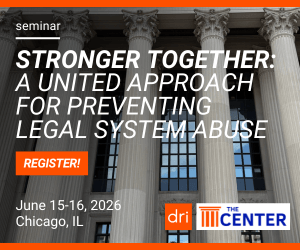
Stronger Together: A United Approach for Preventing Legal System Abuse
From The Center for Law and Public Policy
June 15–16, 2026 | Chicago, Illinois

The civil litigation landscape is rapidly evolving, shaped by changing juror attitudes, coordinated plaintiff strategies, expanding third party litigation funding, and emerging legal and regulatory trends. This seminar brings together leaders from across the defense community to examine the forces driving increased risk and exposure, while identifying practical strategies to respond. Through a forward-looking and collaborative approach, attendees will gain insights on strengthening credibility with modern juries, disrupting plaintiff momentum, navigating third party funded litigation, and advancing meaningful civil justice reform—while building connections and relationships to support a more coordinated path across the defense bar moving forward. Save up to $300 when you register by June 14!

Alternative Dispute Resolution Workshop
July 8–9, 2026 | Chicago, Illinois

More than 95% of all cases filed will be resolved voluntarily, outside of court, and without a determination by a judge or a jury. As such, civil defense lawyers cannot afford to overlook the rapidly evolving role of alternative dispute resolution (ADR) and artificial intelligence in today’s litigation landscape. This seminar is designed to equip practitioners with practical strategies to resolve cases more efficiently, reduce litigation costs, and achieve better outcomes for their clients. Through a dynamic combination of foundational insights and advanced techniques, attendees will gain a deeper understanding of mediation and arbitration, including how to leverage AI tools responsibly and effectively throughout the process. From managing complex ESI issues to navigating ethical considerations and arbitration nuances, this program offers actionable guidance from experienced practitioners and industry leaders. Whether you are looking to sharpen your negotiation skills, stay ahead of emerging trends, or enhance your value to clients, this seminar provides the knowledge and connections necessary to succeed in an increasingly ADR-driven legal environment. Save up to $450 when you register by June 15!

2026 Boot Camp for New Life, Health, and Disability Lawyers
July 15–16, 2026 | Chicago, Illinois

The DRI Life, Health, and Disability Committee is once again sponsoring a program for lawyers who are new to the practice. The program will be led by highly experienced attorneys and will be aimed at providing a basic understanding of the concepts applicable to life, health, and disability litigation. This program receives rave reviews each year it is held. Lawyers who are new to the practice or who wish to brush up on their skills are encouraged to attend! Save up to $400 when you register by July 14!

2026 Senior Living and Long-Term Care Litigation Seminar
September 16–18, 2026 | San Antonio, Texas

Join us in San Antonio for the 2026 Senior Living and Long-Term Care Litigation Seminar, September 16-18 at the Marriott River Center. This high-energy program blends meaningful connections with cutting-edge insights from top industry leaders covering the legal and operational issues shaping the future of senior living and long-term care. Expect dynamic counsel meetings, interactive networking (with a little Texas flair), and up to 10 hours of CLE, including an hour of ethics credit. This year’s seminar is designed to help you connect faster and more effectively—with a first-time attendee meet-up, curated small-group networking, and expanded opportunities to engage with peers and clients. You’ll also have time to enjoy San Antonio, give back through a DRI Cares community project, and connect over a complimentary lunch and coveted networking reception. Save up to $700 when you register by August 3!

2026 DRI Annual Meeting
October 21–23, 2026 | Washington, D.C.

As our nation marks its 250th anniversary, gather with DRI, the Association of Lawyers Defending Business, in Washington, D.C., for a dynamic 2026 Annual Meeting focused on connections, timely insights, and the advancement of the profession. Save up to $700 when you register by September 9!


DRI Education

Upcoming Webinars

Walking the Ethical Line: Lawyer Interviews with Corporate Employees
June 25, 2026 | 11:00 a.m.–12:00 p.m. Central

This session examines the ethical considerations governing interviews with corporate employees during internal investigations or litigation preparation. Topics include Upjohn warnings, privileged communications, employee cooperation, and boundaries imposed by professional conduct rules. Attendees will learn how to conduct effective, compliant interviews that protect the organization while maintaining transparency and ethical integrity. The registration is free for DRI members and $50 for non-members. Earn up to 1.20 hour of Ethics credit!

Free Webinar Series for DRI Members!

We’re proud to announce that the DRI Free Webinar Series for Members is back by popular demand! DRI members will receive FREE access to eight valuable webinars on trending topics that will impact your practice. Earn up to 8.00 hours of continuing legal education (CLE) credit this year at no additional cost— that's a savings of $1,200! This year we are covering a host of hot topics to help you expand your knowledge and build your legal practice.

View the List of Free Webinars


Quote of the Month

“Bees do have a smell, you know, and if they don't they should, for their feet are dusted with spices from a million flowers.”
― Ray Bradbury